
How to Choose the Right Adult Diapers as a Caregiver for the Elderly
- Understanding the Individual Needs of the Elderly
- Types of Adult Diapers and Their Suitability
- Key Factors When Selecting Adult Diapers
- Importance of Proper Sizing
- Role of Caregivers in Diaper Management
- Common Mistakes Caregivers Should Avoid
- Benefits of Choosing the Right Adult Diaper
- Practical Tips for Caregivers
- Conclusion

Caring for elderly individuals requires patience and compassion, especially when managing incontinence. Adult diapers play an important role in maintaining hygiene, comfort, and dignity for those with reduced mobility or health conditions.
Choosing the right adult diaper depends on the person’s health, mobility, skin sensitivity, and daily needs. This guide explains how caregivers can choose the most suitable adult diapers for elderly individuals, with a focus on practicality, comfort, and long-term caregiving efficiency.
Understanding the Individual Needs of the Elderly
Diaper selection should be individualized, as every elderly person has different needs. Caregivers must first assess the overall condition before choosing a product.
Level of Incontinence
Incontinence varies in severity and directly affects diaper selection:
- Light incontinence: Occasional leakage during coughing, sneezing, or mild urgency
- Moderate incontinence: Frequent leakage requiring regular protection
- Heavy incontinence: Complete loss of bladder or bowel control
This helps match the right level of absorbency to the need. Using a low-absorbency diaper for heavy incontinence will almost always result in leakage and discomfort, while overusing high-absorbency products for mild cases may be unnecessary and costly.
Mobility and Physical Condition
Mobility is another key factor in diaper selection:
- Active elderly: Can walk and use the toilet with assistance
- Semi-mobile elderly: Require partial assistance or mobility aids
- Bedridden elderly: Cannot move independently and depend entirely on caregivers
For active individuals, pull-up diapers are often more suitable. For bedridden patients, tape-type diapers are more practical as they allow easy changes without excessive lifting.
Skin Condition and Sensitivity
Elderly skin becomes thinner, drier, and more fragile with age. Many also suffer from conditions such as eczema, diabetes-related skin issues, or pressure sores.
Caregivers should consider whether the individual:
- Has sensitive or allergy-prone skin
- Experiences frequent rashes or redness
- Has existing wounds or pressure injuries
This helps in selecting hypoallergenic diapers with soft materials and good breathability to minimize irritation.
Types of Adult Diapers and Their Suitability
Understanding the different types of adult diapers helps caregivers match products to real-life needs.
Pull-up diapers look like regular underwear and suit independent or semi-independent seniors.
Advantages:
- Easy to wear and remove
- Provides a sense of independence
- Discreet under clothing
- Comfortable for daily movement
Limitations:
- Not suitable for bedridden patients
- Difficult for caregivers to change while the patient is lying down
- Less efficient for heavy incontinence
Tape-type diapers are widely used in caregiving environments, especially for bedridden patients.
Advantages:
- Easy to change while the patient is lying down
- Adjustable fit using side tapes
- High absorbency for long hours
- Suitable for overnight use
Limitations:
- Requires caregiver assistance
- It may take practice to fit properly
- Less convenient for mobile users
3. Pad or Insert-Type Products
These are absorbent pads worn inside normal underwear.
Advantages:
- Cost-effective
- Lightweight and breathable
- Easy to replace
Limitations:
- Limited absorbency
- Not suitable for moderate to heavy incontinence
- Requires frequent changes
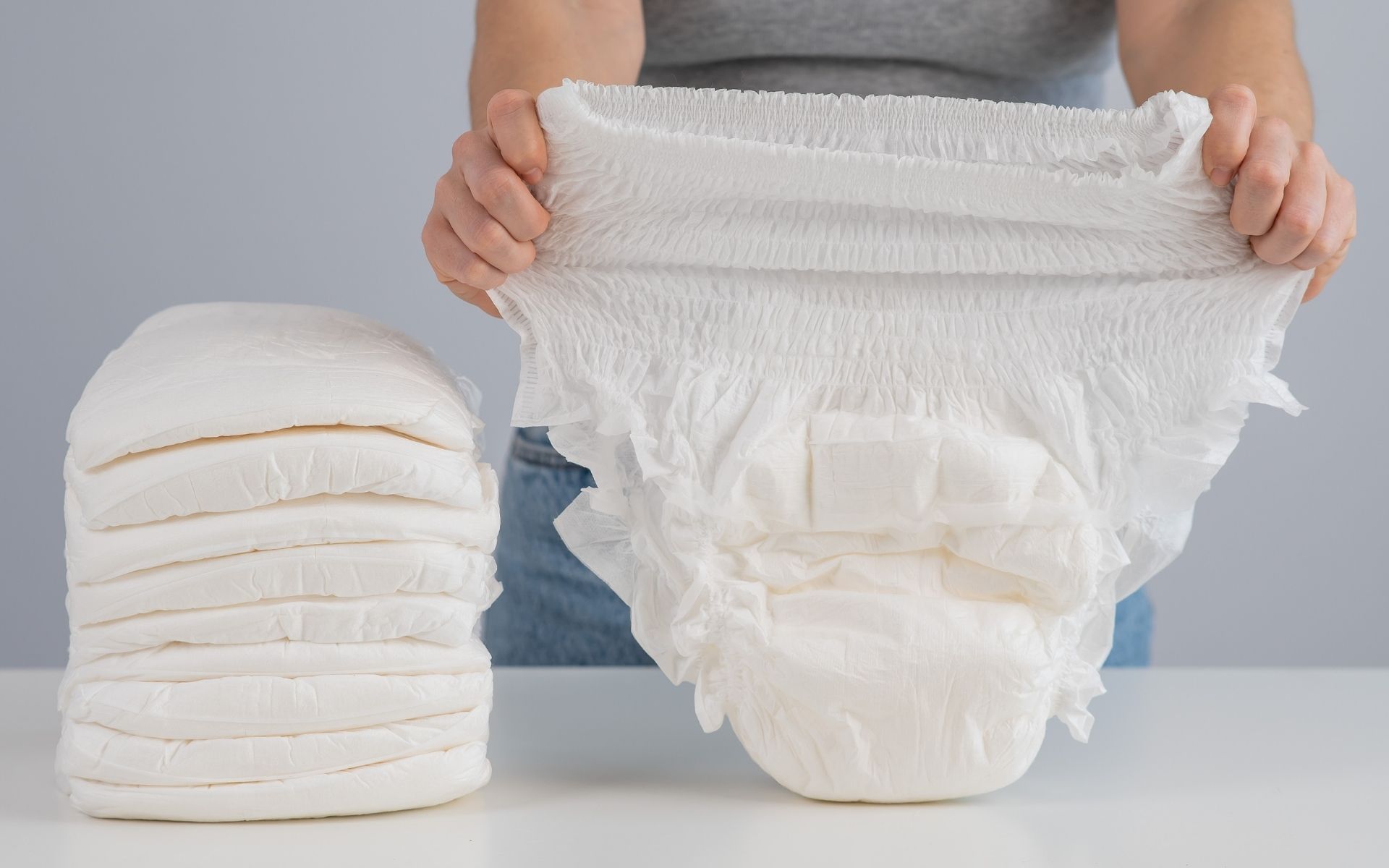
Key Factors When Selecting Adult Diapers
1. Absorbency Performance
Absorbency is the most important factor in diaper selection. A good adult diaper should:
- Quickly absorb liquid
- Lock moisture away from the skin
- Prevent backflow even under pressure
- Maintain dryness for several hours
For nighttime or long intervals, high-absorbency diapers help reduce changes and support uninterrupted rest.
2. Comfort and Fit
Comfort directly affects whether elderly individuals can consistently tolerate wearing diapers.
A proper fit should:
- Be snug but not tight
- Prevent friction on the skin
- Move naturally with the body
- Avoid gaps that cause leakage
Ill-fitting diapers can lead to discomfort, skin marks, and reduced willingness to wear them.
3. Breathability and Air Circulation
Breathable diapers allow airflow, reducing heat and moisture buildup. This is especially important in warm and humid climates.
Benefits of breathability include:
- Reduced risk of skin irritation
- Lower chances of fungal infections
- Improved overall comfort
4. Skin Protection Features
Since elderly individuals are prone to skin damage, diaper materials must be gentle and protective.
Look for features such as:
- Soft inner layers
- Hypoallergenic materials
- pH-balanced surfaces
- Moisture-wicking technology
These helps prevent rashes, redness, and long-term skin damage.
5. Leakage Prevention Design
Leakage is one of the most common issues in diaper use.
Effective diapers should include:
- Elastic leg cuffs
- Raised side barriers
- Secure waist fastening
- Anti-leak channels
These features help contain fluid effectively, even when the patient shifts position.
6. Odor Control Technology
Odor control helps maintain dignity and comfort for both the elderly and caregivers.
Modern diapers often use:
- Odor-locking polymers
- Antibacterial layers
- Neutralizing agents
This ensures a cleaner and more pleasant environment.
Experience Yuta’s 5× Protection for Everyday Confidence
Request a free sample and experience Yuta’s trusted comfort, reliable protection and peace of mind for everyday care.
Importance of Proper Sizing
Correct sizing is essential for both comfort and performance.
If too small:
- Causes discomfort and skin pressure
- Increases risk of tearing or leaks
- Restricts movement
If too large:
- Poor fit around the waist and legs
- Higher chance of leakage
- Reduced absorption efficiency
Caregivers should always measure waist and hip circumference before purchasing.
Role of Caregivers in Diaper Management
Caregivers are responsible for more than just changing diapers. Their role includes maintaining hygiene, comfort, and dignity.
Key responsibilities:
- Regular diaper changes based on usage
- Checking skin condition for early signs of irritation
- Ensuring correct diaper placement
- Maintaining cleanliness during each change
- Providing emotional reassurance
Caregiver attentiveness impacts the health and well-being of seniors.
Common Mistakes Caregivers Should Avoid
1. Choosing Based Only on Price
Low-cost diapers may lack proper absorbency and comfort.
2. Ignoring Mobility Needs
The wrong type of diaper can make care more challenging.
3. Incorrect Sizing
Poor fit leads to leakage and discomfort.
4. Delaying Diaper Changes
Waiting too long increases the risk of infection and skin damage.

Benefits of Choosing the Right Adult Diaper
Selecting the right diaper provides significant advantages:
- Improved comfort and dignity
- Better skin health and reduced irritation
- Fewer leakage incidents
- Easier caregiving routines
- Improved sleep quality
- Reduced emotional stress for both parties
This creates a more stable and supportive caregiving environment.
Practical Tips for Caregivers
- Assess the incontinence level before purchasing
- Match diaper type with mobility condition
- Prioritize breathable and soft materials
- Test different brands before bulk buying
- Monitor skin condition regularly
- Use overnight diapers for extended protection
- Always keep extra stock for emergencies
Conclusion
Choosing the right adult diaper as a caregiver is a critical part of elderly care. It goes beyond hygiene management—it is about preserving dignity, ensuring comfort, and maintaining health. A well-chosen diaper can significantly improve the daily life of elderly individuals while making caregiving more efficient and less stressful.
By understanding individual needs, selecting appropriate diaper types, and focusing on comfort, absorbency, and skin protection, caregivers can provide higher-quality care. Ultimately, the right adult diaper supports not only physical well-being but also emotional dignity for both the elderly and their caregivers.
Talk to Yuta for Better Daily Incontinence Care
Contact Yuta today to learn how our adult diapers support comfort, dignity and dependable daily protection.